Halloween Black Cat SVG: A Designer’s Real-World Review
First Impressions: Spooky, Simple, and Surprisingly Versatile
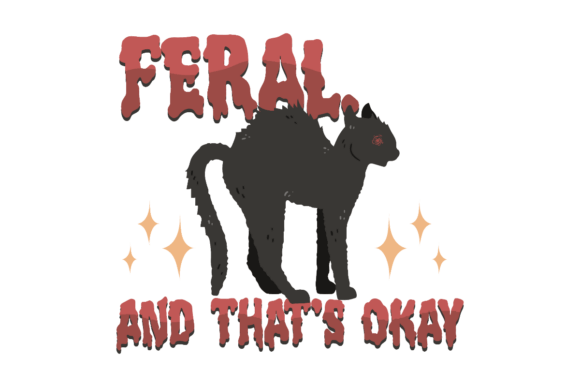
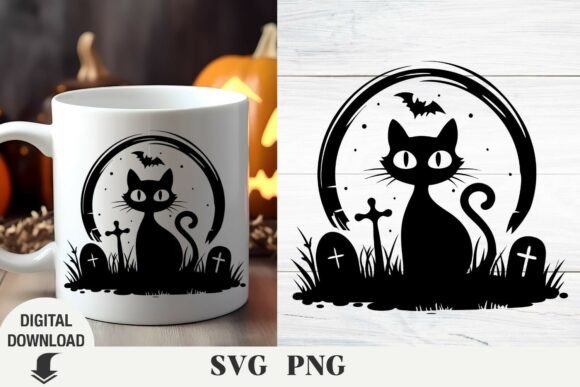
When I opened Halloween Black Cat Svg, Halloween, Cat, I wasn’t expecting a showstopper—but I *was* hoping for something that would hold up under needle and thread. What I got was a clean, silhouette-driven black cat with arched back, pointed ears, and a subtle tail curve. No intricate whiskers, no glittery eyes, no layered shadows—just confident negative space and balanced proportions. It reads instantly as “Halloween,” but not in a kitschy way. It feels like a design made *for stitching*, not just screen display. That matters—especially when you’re prepping a custom embroidered tote bag for your Etsy shop or stitching 30 matching aprons for a local bakery’s holiday pop-up.
Where This Design Truly Shines
- Embroidered patches: The bold outline and open interior make it ideal for satin-stitched borders with clean fill-stitch centers—even at 3” wide. I tested it on twill-backed cotton, and the shape held crisp edges without puckering.
- Tote bags & tea towels: On medium-weight canvas or linen-cotton blends, the design anchors beautifully near the bottom corner or centered on the front panel. It doesn’t compete with texture—it complements it.
- Baby embroidery: For onesies or burp cloths, I resized it to 2.25” and used soft poly thread. The minimal detail avoids scratchiness, and the friendly feline posture reads as playful—not eerie—on infant items.
- Sweatshirt embroidery: Paired with a light stabilizer and reduced stitch density (I trimmed ~12% from default fill), it stitched smoothly over fleece backing. No thread breaks, no distortion.
- Holiday gifts & boutique branding: Because it’s not overly literal (no pumpkins, no “Boo!” text), it works across seasons—think October through early November—and fits naturally into a cohesive line of handmade product designs.
Use With Care: Real Fabric & Function Limits
This isn’t a one-size-fits-all machine embroidery design. Its strength is simplicity—but that also defines its boundaries. Avoid using Halloween Black Cat Svg, Halloween, Cat for:
- Small hoop sizes under 4×4”: The tail tip and ear points risk clipping if scaled too tightly. Always check your hoop clearance before loading.
- Stretchy fabrics like jersey or ribbed knits: Without proper cutaway stabilizer and careful hooping, the arch of the back can distort. Test first—don’t assume it’ll behave like a geometric shape.
- Dark fabric + dark thread combos: Since it’s a solid black silhouette, contrast relies entirely on thread choice. On navy sweatshirts, I switched to charcoal gray thread—not black—to lift definition. Always mock it up digitally in both light and dark backgrounds.
- Curved surfaces like caps: The base width sits comfortably on flat panels, but on a curved crown, the ears may pull slightly outward unless you adjust placement or use a cap frame.
- Frequent-wash items like baby blankets: While the stitch count is moderate, dense fill areas (like the body core) benefit from high-quality embroidery thread. Don’t skimp here—customer trust hinges on durability, not just charm.
What It Adds to Your Craft Business—Beyond the Stitch
As an embroidery designer who’s reviewed hundreds of digital embroidery files, I can say this: Halloween Black Cat Svg, Halloween, Cat quietly elevates professionalism. It doesn’t scream “sale,” but it *earns* repeat buyers. Why? Because it looks intentional—not clip-art-y. When stitched cleanly on a linen pillow cover or a heavyweight apron, it reads as part of a considered collection, not a last-minute add-on. That consistency builds brand recognition for small shop owners and Etsy sellers alike. Customers notice when a design feels *made for the medium*, not pasted onto it.
It also supports thoughtful gifting. A personalized embroidered kitchen towel with this cat? Warm, seasonal, and uncluttered—ideal for housewarmings, teacher gifts, or hostess presents. No need to explain the joke; the mood lands immediately.
Practical Designer Notes Before You Stitch
- Always test on scrap fabric first—same weight and weave as your final project. Even simple designs shift with tension changes.
- Review stitch density in your embroidery software. If it’s dense (above 18,000 stitches), consider reducing fill opacity or simplifying interior lines—especially for baby items or lightweight apparel.
- Confirm licensing scope. The listing says “You may use these files to make cups to sell”—but does that extend to embroidered apparel or digital resale? Check terms before adding it to your craft business catalog.
- Inspect corners and curves in your editing software. Zoom in: are the ear tips sharp or slightly rounded? That affects how crisply they stitch on low-thread-count fabrics.
- Try a black-and-white printable mockup. If it reads clearly without color, it’ll translate well across thread palettes and fabric tones.
- Match stabilizer to fabric—not just project type. A lightweight tear-away works for tea towels; cutaway is non-negotiable for stretchy or textured knits.
Final Thought: A Quiet Workhorse, Not a Flashy Trend
Halloween Black Cat Svg, Halloween, Cat won’t go viral—but it will sell steadily. It’s the kind of embroidery file that earns quiet respect: easy to digitize further (add glow effects, combine with bats, convert to applique), flexible across Crafts and Graphics applications, and reliably legible at multiple scales. For makers who value clarity over clutter, function over flourish, and longevity over novelty, this is a smart addition to your digital embroidery file library. Just remember: its simplicity is its superpower—honor that in your stitch choices, fabric pairings, and presentation. Done right, it doesn’t just say “Halloween.” It says, “I made this—with care.”