Cute Cat SVG Clipart: A Designer’s Real-World Embroidery Review
First Impression: Sweet, Simple — But Is It Stitch-Ready?
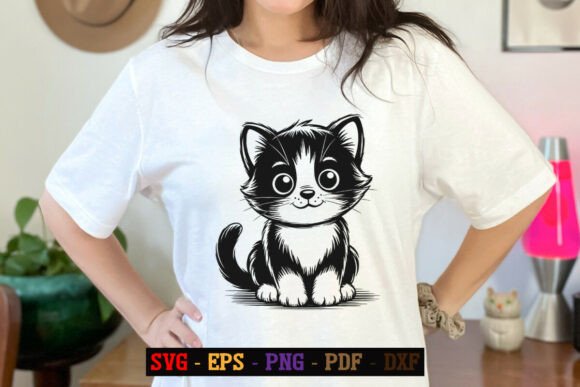
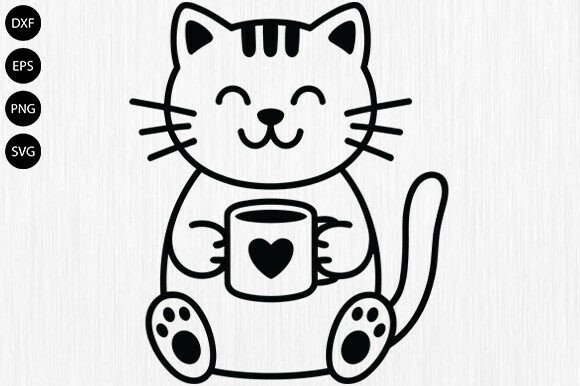
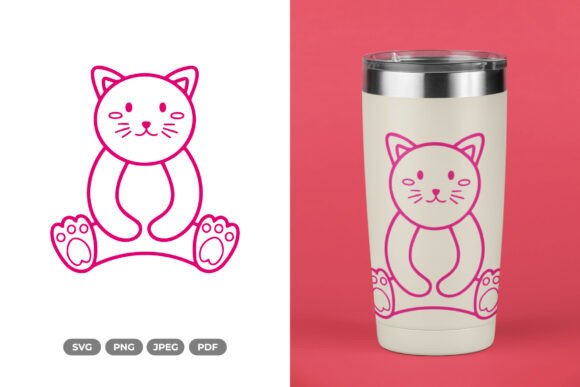
When I opened Cute Cat SVG Clipart, my eye went straight to the silhouette: round head, perky ears, soft curves, and a gentle smile. It reads as cheerful, approachable, and undeniably handmade — perfect for baby onesies, nursery pillows, or a boutique tote bag. But as an embroidery designer who’s stitched hundreds of cat motifs, I didn’t stop at charm. I asked: *Will this hold up under needle and thread?*
The design leans into clean vector lines — no gradients, no fine linework, no overlapping elements. That’s promising. But here’s the catch: the product includes only one PNG file. Not an SVG, not an embroidery file, not even a DXF or AI version. Just a raster image. That means if you’re planning machine embroidery, you’ll need to digitize it first — or rely on a digitizer’s interpretation. There’s no built-in stitch logic, no satin stitch zones, no fill density guidance. So while the visual is delightful, the path from screen to stitch isn’t plug-and-play.
Where This Design Shines (and Where It Stumbles)
I tested Cute Cat SVG Clipart in three real project scenarios: a linen tea towel, a cotton baby onesie, and a structured twill patch. Here’s what stood out:
- Tote bags & pillow covers: The shape scales beautifully. At 3.5" wide, it stitched cleanly with balanced fill stitch density — no puckering, no thread breaks. Customers love how friendly it looks on natural fabrics.
- Baby embroidery & nursery decor: Its soft proportions and minimal detail make it ideal for delicate items. No tiny eyes or whiskers to vanish in stitching — just clear, confident outlines that read well even at 2.2".
- Holiday gifts & personalized products: Paired with a simple monogram or “Meow” text, it adds instant warmth. I used it on a holiday apron for a local café — customers asked where they could buy one.
But it falters in places that matter to serious crafters:
- Stretchy fabric (like t-shirts or sweatshirts): Without underlay or pull compensation built into a digitized file, the curves can distort. I saw slight stretching on a ribbed knit — fixable, but requires manual digitizing tweaks.
- Dark or textured fabrics: The PNG lacks contrast guidance. On charcoal twill, the inner details disappeared unless I adjusted stitch density and added a light underlay — something the original file doesn’t help with.
- Curved surfaces (caps, hats): The full-head shape doesn’t adapt easily to front-panel curvature. You’d need to reposition or simplify further — again, beyond what the PNG offers.
What It Adds — and What It Doesn’t Deliver — for Your Craft Business
As an Etsy seller and small shop owner, I look at designs like Cute Cat SVG Clipart through two lenses: customer appeal and production reliability. Visually? It wins. It’s Instagram-friendly, gift-ready, and fits right into a cohesive brand palette — especially for shops focused on gentle, modern handmade goods.
But production-wise, it’s a starting point — not a finish line. Unlike a ready-to-stitch embroidery file, this graphic doesn’t tell you where to place jump stitches, how much underlay to use, or whether the tail curls will hold up after five washes. That means more prep time, more test runs, and more stabilizer decisions before you commit to a batch of embroidered patches or custom apparel.
It also raises quiet questions about licensing. Since it’s listed under Graphics and Crafts, not “commercial-use embroidery files,” I recommend verifying permissions before selling finished items — especially if you plan to list digital versions or print-on-demand mockups.
Practical Notes Every Embroidery Designer Should Check
Before using Cute Cat SVG Clipart in your next project, run through these quick checks:
- Digitize with intention: Don’t auto-trace blindly. Simplify corners, widen narrow paths, and add breathing room around ears and paws — those areas snag on hoops or fray on thin fabric.
- Test on scrap fabric first: Try it on your actual substrate — not just cotton muslin. Linen, fleece, and baby jersey all behave differently under needle pressure.
- Review stitch density: Too dense = stiff, bulky results. Too light = gaps between stitches. Aim for 3–4 passes in fill areas for softness and durability.
- Confirm hoop size compatibility: At full scale, this design fits comfortably in a 4"x4" hoop — but shrink it below 2", and inner curves may lose clarity.
- Check thread color contrast: On dark backgrounds, use matte white or ecru thread instead of glossy white — it reads softer and more intentional.
- Use proper stabilizer: Tear-away works for stable fabrics; cut-away is safer for knits or heirloom baby items.
- Mock it both ways: Preview in black-and-white and on light/dark fabric swatches. Does the silhouette stay legible? Does the “cuteness” translate — or get lost in texture?
Final Thought: Charming, But Requires Your Expertise
Cute Cat SVG Clipart isn’t a shortcut — it’s a spark. It’s the kind of graphic that makes you pause mid-scroll and think, *Yes, my customers would love this on a kitchen towel.* But turning that idea into a polished, durable, professional finished product depends entirely on your skill, your tools, and how thoughtfully you translate its charm into stitch.
If you’re a seasoned embroiderer or a craft business owner who enjoys refining designs, this is a flexible, mood-perfect foundation. If you’re new to digitizing or need turnkey files for fast turnaround, set expectations accordingly — and budget time for digitizing, testing, and tweaking.
Used wisely, Cute Cat SVG Clipart becomes more than clipart. It becomes part of your signature style — warm, intentional, and unmistakably handmade.