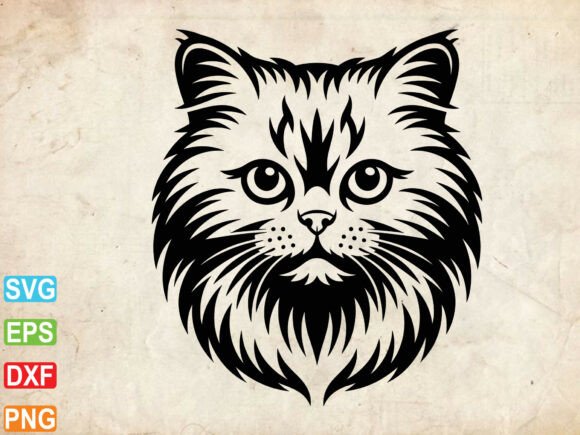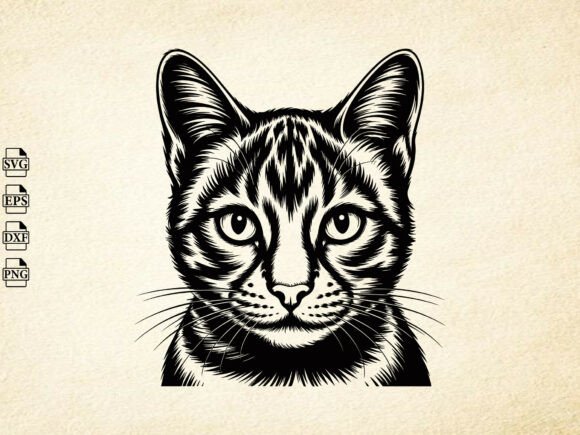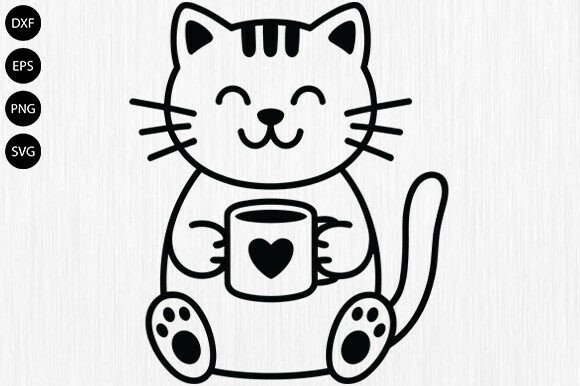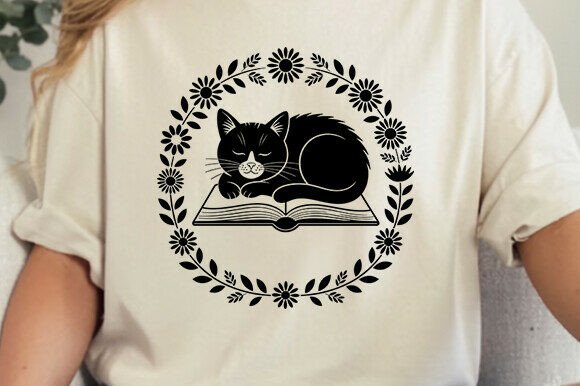
Cool Cat SVG for Embroidery Projects
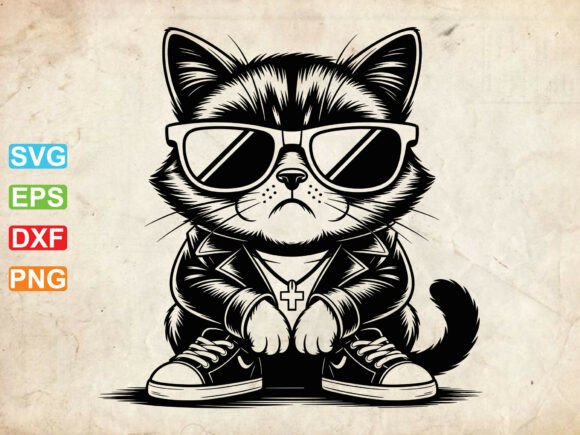
As a designer who’s stitched over 300 custom embroidery projects—from boutique baby onesies to Etsy shop merchandise—I opened Cool Cat SVG, Cat Svg Cricut, Cat expecting something playful but functional. What I found wasn’t just another cat silhouette; it was a clean, confident shape with quiet personality—slightly retro, effortlessly cool, and built for real-world stitching.
A First Stitch Test: Tote Bag Edition
Last week, I used Cool Cat SVG, Cat Svg Cricut, Cat on a natural cotton canvas tote for a local coffee shop’s staff gift set. No appliqué, no layered fills—just a single-color satin-stitched outline with subtle internal contour lines. The result? Crisp edges, zero thread nesting, and that rare “handmade-but-polished” look customers actually photograph and tag. It didn’t scream “cute.” It whispered “I’ve got taste”—and that matters when your finished product sits on a shelf next to $45 artisan goods.
What This Design *Actually* Feels Like in the Hoop
The Cool Cat SVG, Cat Svg Cricut, Cat is a silhouette-based design—not fussy, not cartoonish, not overly detailed. Its strength lies in proportion and negative space: wide-set ears, a relaxed curve along the back, and a tail that loops just enough to suggest motion without demanding precision stitching. That makes it unusually forgiving across fabric types. On medium-weight cotton twill (think aprons or tea towels), it stitched cleanly at 3.8" wide. On lightweight rayon-blend baby onesies? I scaled it down to 2.2", added a tear-away + cut-away stabilizer combo, and still kept all the defining curves legible.
Where It Shines—and Where to Pause
Cool Cat SVG, Cat Svg Cricut, Cat works beautifully for:
- Custom apparel: Sweatshirt embroidery (especially on heather grey or navy), crewneck tees, and structured caps—when placed front-and-center or subtly on the sleeve.
- Personalized gifts: Embroidered pillow covers for teens, nursery wall hangings, holiday stockings, and monogrammed kitchen towels where charm meets restraint.
- Small business merchandise: Boutique branding on reusable bags, embroidered patches for denim jackets, or as a subtle logo alternative on aprons for bakeries or florists.
- Digital product previews: Clean enough to render sharply in printable mockups—even small thumbnails on Etsy listings—without pixelation or visual noise.
But be thoughtful in these situations:
- Stretchy fabrics (like jersey or ribbed knits): Use light- to medium-weight cut-away stabilizer and reduce stitch density slightly—those smooth curves can pull if tension isn’t balanced.
- Dark or textured fabrics (black terry cloth, linen blends): Test thread color contrast first. A soft charcoal grey thread reads richer than black-on-black, and avoids the “muddy outline” effect.
- Curved surfaces (caps, curved pockets): Avoid placing the full design across seams or high-curve zones unless you’re using a cap frame and have confirmed hoop compatibility.
- Frequent-wash items (baby clothes, kitchen towels): Stick to satin or fill stitches—not delicate running stitch accents—unless you’re reinforcing with underlay.
Design Judgment: Beyond “It’s Cute”
This isn’t just clipart repurposed for embroidery. Cool Cat SVG, Cat Svg Cricut, Cat carries intentional rhythm: the ear tips align visually with the chin point; the tail’s endpoint echoes the nose’s angle. That kind of balance translates directly to perceived professionalism. When customers see this on a handmade product, they don’t think “someone slapped a graphic on there.” They sense intention—and that builds trust, especially for Etsy sellers and craft fair vendors competing on authenticity.
It also scales well across formats. As a machine embroidery design, it holds up at 1.8" for a baby bib and expands cleanly to 4.5" for a tote bag front panel—no jagged edges or collapsed curves. That flexibility means fewer redesigns, less time re-digitizing, and more consistency across your craft business product line.
Practical Designer Notes Before You Stitch
Before committing to a client project or bulk production run with Cool Cat SVG, Cat Svg Cricut, Cat, here’s what I always do:
- Test on scrap fabric—same type, same color, same stabilizer you’ll use for the final piece.
- Check thread color contrast in both natural and artificial light. A warm taupe thread on oatmeal linen looks richer than stark white.
- Review stitch density in your embroidery software. If it’s dense near the ear base or tail tip, consider reducing density by 5–8% for breathability on wearables.
- Confirm hoop size before digitizing or resizing. Some versions may require a 5x7 hoop minimum—don’t assume it fits your 4x4.
- Inspect small details in zoom view: Are inner contour lines spaced far enough apart for standard needle clearance? Do corners have adequate underlay?
- Test black-and-white mockups first—this design relies on shape, not shading, so grayscale previews tell you everything about clarity.
- Verify licensing. Since this is listed as a digital embroidery file in the Graphics category, confirm whether commercial use (e.g., selling finished embroidered totes) is permitted—some SVG bundles restrict resale of physical items.
Final Thought: It’s Not Just a Cat. It’s a Design Decision.
Cool Cat SVG, Cat Svg Cricut, Cat won’t win awards for complexity—but it earns respect for reliability. In a craft business where time is scarce and customer expectations are high, having a go-to silhouette that stitches cleanly, photographs well, and feels cohesive across products is quietly invaluable. Whether you’re an embroidery designer building a portfolio, an Etsy seller refreshing seasonal listings, or a small shop owner adding personality to staff uniforms—it’s the kind of design that works *with* your process, not against it. And in the world of handmade product development, that’s not just practical. It’s professional.